In the realm of measurements, 956 feet is a significant length that can be applied in various contexts, from construction and architecture to sports and natural features. Understanding this measurement can enhance your comprehension of scale and proportion in different fields. For instance, in construction, a structure measuring 956 feet could refer to a high-rise building or a long bridge, showcasing the engineering capabilities of modern design. In sports, a distance of 956 feet is approximately equivalent to 318 yards, which could relate to the length of a football field or the distance covered in a long throw. In nature, 956 feet can describe the height of a mountain or the depth of a canyon, highlighting the majestic features of the landscape. For instance, many notable mountains around the world reach heights that can be compared to this measurement, emphasizing the grandeur of our planet's topography. When considering 956 feet in terms of travel or recreation, it represents a significant distance for activities such as hiking or running. For outdoor enthusiasts, a hike covering 956 feet of elevation gain can be a challenging and rewarding experience, providing stunning views and a sense of accomplishment. In summary, 956 feet is a versatile measurement that can be related to various domains, including architecture, sports, nature, and recreational activities. Understanding this length can provide valuable insights into scale and help visualize distances in both urban and natural environments. Whether you are discussing a skyscraper, a sports field, or a scenic viewpoint, recognizing the significance of 956 feet can enhance your appreciation of the world around you.
956 ft to m
956 Feet to Meters
956 Foot to Meter converter
The measurement of 956 feet, which is equivalent to approximately 291.3888 meters, is significant in various contexts, including architecture, engineering, and natural features. This length can be observed in several notable structures and geographical formations around the world. For instance, in the realm of architecture, buildings that reach this height often represent engineering feats, showcasing the capabilities of modern construction techniques. One such example is the height of certain skyscrapers, where 956 feet signifies a notable elevation that allows for expansive views and maximizes the use of urban space. In the field of engineering, the length of 956 feet can be relevant in the design of bridges, where span lengths can vary dramatically, and achieving a specific length can determine the structural integrity and safety of the design. Moreover, in terms of natural features, certain mountains or cliffs may reach heights around this measurement, influencing local ecosystems and weather patterns. Understanding the implications of this length is crucial for professionals in construction and environmental science, as it affects zoning laws, safety regulations, and environmental impact assessments. When discussing the height of 956 feet in a global context, it can serve as a point of reference for comparisons, whether in terms of elevation, structural capacity, or even the height of various landmarks. In summary, 956 feet or 291.3888 meters is a measurement that carries importance across multiple disciplines, and its relevance can be seen in various applications, from towering buildings to expansive bridges and significant geographical landmarks.
How to convert 956 Feet to Meter?
| 956 ft * | 0.3048 m | = 291.3888 m |
| 1 ft |
A common question is How many foot in 956 meter? And the answer is 3136.48294 ft in 956 m. Likewise the question how many meter in 956 foot has the answer of 291.3888 m in 956 ft.
How much are 956 Feet in Meters?
956 Feet equal 291.3888 Meters (956 ft = 291.3888 m). Converting 956 ft to m is easy. Simply use our calculator above, or apply the formula to change the length 956 ft to m.
Convert 956 ft to common Lengths
| Unit | Lengths |
|---|---|
| Nanometer | 291388800000 nm |
| Micrometer | 291388800 µm |
| Millimeter | 291388.8 mm |
| Centimeter | 29138.88 cm |
| Inch | 11472 in |
| Yard | 318.666667 yd |
| Meter | 291.3888 m |
| Kilometer | 0.291389 km |
| Mile | 0.181061 mi |
| Nautical Mile | 0.157337 nmi |
What is 956 Feet in m?
To convert 956 ft to m multiply the Lengths in by 0.3048. The 956 ft in m formula is [m] = 956 * 0.3048. Thus, for 956 Feet in Meter we get 291.3888 m.
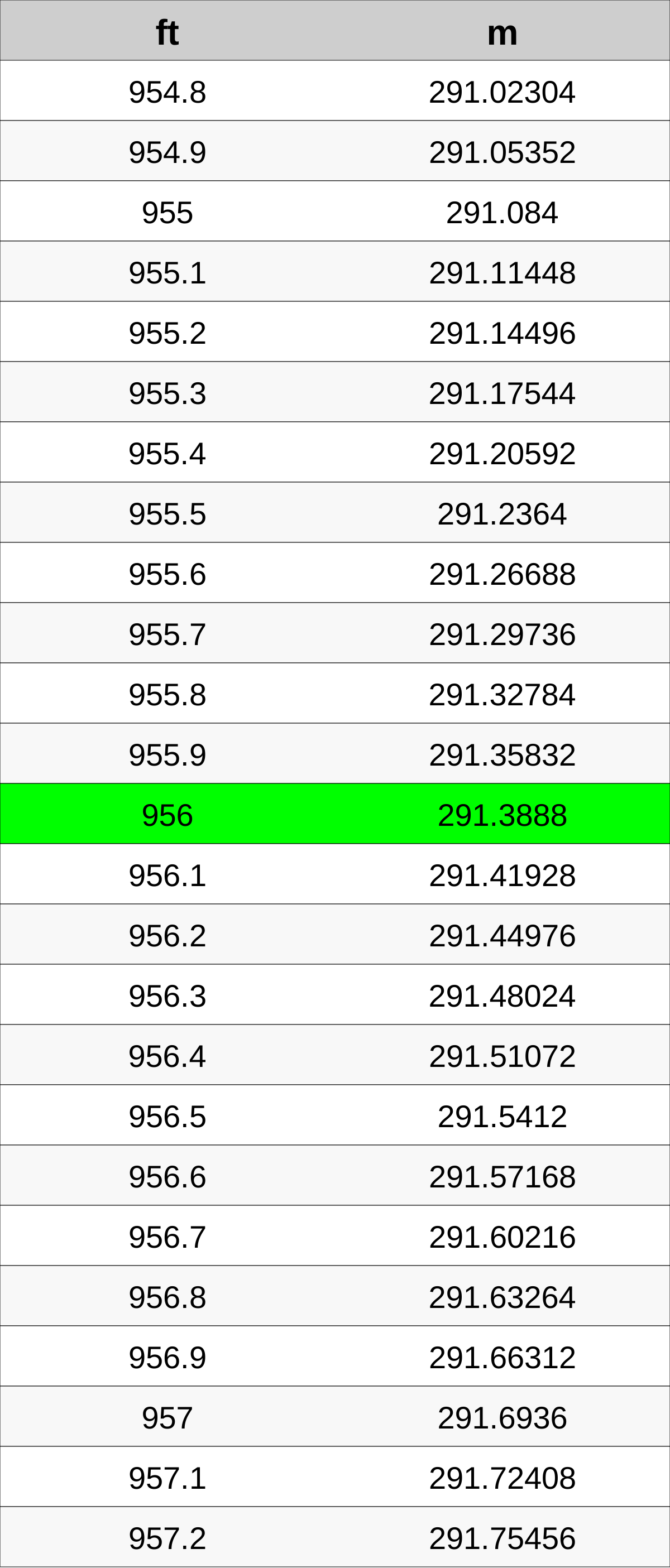
956 Foot Conversion Table
Further Foot to Meter calculations
- 946 ft to Meters
- 947 Feet to Meters
- 948 ft to Meter
- 949 ft to m
- 950 ft to Meters
- 951 ft to Meter
- 952 ft to Meters
- 953 ft to Meter
- 954 Feet to Meter
- 955 ft to m
- 956 Feet to m
- 957 ft to Meter
- 958 ft to m
- 959 ft to Meter
- 960 Feet to Meters
- 961 Feet to Meter
- 962 Feet to Meters
- 963 Feet to Meters
- 964 Feet to Meter
- 965 Feet to Meter
- 966 Feet to m
Alternative spelling
956 ft to m, 956 ft into m, 956 ft in m, 956 Foot to Meter, 956 Foot into Meter, 956 Foot in Meter, 956 Feet to Meters, 956 Feet into Meters, 956 Feet in Meters, 956 Foot to m, 956 Foot into m, 956 Foot in m, 956 ft to Meter, 956 ft into Meter, 956 ft in Meter, 956 Feet to m, 956 Feet into m, 956 Feet in m, 956 ft to Meters, 956 ft into Meters, 956 ft in Meters
Further Languages
- 956 Feet To Meters
- 956 крак в Метър
- 956 Stopa Na Metr
- 956 Fod Til Meter
- 956 Fuß In Meter
- 956 πόδι σε μέτρο
- 956 Pie En Metro
- 956 Jalg Et Meeter
- 956 Jalka Metri
- 956 Pied En Mètre
- 956 Stopa U Metar
- 956 Láb Méter
- 956 Piede In Metro
- 956 Pėda Iki Metras
- 956 Piedi Fil Metr
- 956 Voet Naar Meter
- 956 Stopa Na Metr
- 956 Pé Em Metro
- 956 Picior în Metr
- 956 Stopa Na Meter
- 956 Fot Till Meter
- 956 Voet In Meter
- 956 متر إلى قدم
- 956 Ayaq Metr
- 956 ফুট মধ্যে মিটার
- 956 Peu A Metre
- 956 पैर से मीटर
- 956 Kaki Ke Meter
- 956 フィート・トゥ・メーターズ
- 956 발 미터
- 956 Fot Til Meter
- 956 нога в метр
- 956 Čevelj V Meter
- 956 Këmbë Në Metri
- 956 ฟุตเมตร
- 956 પગ મીટર
- 956 Fit Metre
- 956 нога в метр
- 956 Foot Sang Mét
- 956 英尺为米
- 956 英尺至米
- 956 Feet To Metree