The measurement of 796 feet is significant in various contexts, ranging from architecture to natural landmarks. In terms of height, a structure reaching 796 feet can be classified among the taller buildings in urban environments, often featuring impressive designs and innovative engineering. For instance, skyscrapers of this height typically offer breathtaking views and can serve as iconic symbols of their cities. In the realm of natural wonders, some mountains and cliffs may also reach around 796 feet, providing awe-inspiring sights for hikers and nature enthusiasts. In sports, a distance of 796 feet can relate to specific measurements in fields such as baseball, where outfield fences may be designed to challenge players. Moreover, in the context of outdoor activities, such as zip-lining or bungee jumping, a height of 796 feet can create thrilling experiences for adventure seekers. When discussing the significance of 796 feet, it is also essential to consider its implications in various industries. For example, in construction, understanding the dimensions of materials and the spatial requirements for buildings that reach this height is crucial for safety and compliance with regulations. Additionally, in aviation, knowing the altitude of 796 feet can be vital for flight operations, particularly during takeoff and landing phases. Overall, the length of 796 feet serves as a versatile measure that resonates across multiple fields, highlighting its importance in architecture, nature, sports, and industry. Whether you're exploring urban landscapes or engaging in outdoor adventures, the significance of 796 feet is undeniable, making it a noteworthy figure in both practical applications and cultural references.
796 ft to m
796 Feet to Meters
796 Foot to Meter converter
The measurement of 796 feet, equivalent to approximately 242.6208 meters, is a significant length that can be contextualized across various fields and applications. In the realm of construction and architecture, this length is commonly associated with large structures, such as bridges, skyscrapers, and sports facilities. For instance, many iconic bridges span lengths around this measure, showcasing engineering prowess and design innovation. In sports, a standard American football field, including the end zones, measures about 360 feet, making 796 feet more than twice the length of such a field, which can help visualize the vastness of this measurement. In the context of transportation, 796 feet can also refer to the dimensions of certain ships or vessels, particularly in maritime industries, where dimensions are critical for navigation and docking. Additionally, this length is relevant in environmental studies, where it can represent distances in ecological assessments, such as the width of rivers or the span of habitats being studied. Understanding this measurement is essential for professionals in various sectors, including engineering, architecture, environmental science, and urban planning, as it plays a crucial role in design specifications, project planning, and resource management. When considering conversions, knowing that 796 feet equals 242.6208 meters can be particularly useful for international projects where metric measurements are standard. Overall, 796 feet is a versatile and important measurement that serves multiple purposes across different industries, illustrating the interconnectedness of dimensions in practical applications.
How to convert 796 Feet to Meter?
| 796 ft * | 0.3048 m | = 242.6208 m |
| 1 ft |
A common question is How many foot in 796 meter? And the answer is 2611.548556 ft in 796 m. Likewise the question how many meter in 796 foot has the answer of 242.6208 m in 796 ft.
How much are 796 Feet in Meters?
796 Feet equal 242.6208 Meters (796 ft = 242.6208 m). Converting 796 ft to m is easy. Simply use our calculator above, or apply the formula to change the length 796 ft to m.
Convert 796 ft to common Lengths
| Unit | Length |
|---|---|
| Nanometer | 242620800000 nm |
| Micrometer | 242620800 µm |
| Millimeter | 242620.8 mm |
| Centimeter | 24262.08 cm |
| Inch | 9552 in |
| Yard | 265.333333 yd |
| Meter | 242.6208 m |
| Kilometer | 0.242621 km |
| Mile | 0.150758 mi |
| Nautical Mile | 0.131005 nmi |
What is 796 Feet in m?
To convert 796 ft to m multiply the Lengths in by 0.3048. The 796 ft in m formula is [m] = 796 * 0.3048. Thus, for 796 Feet in Meter we get 242.6208 m.
796 Foot Conversion Table
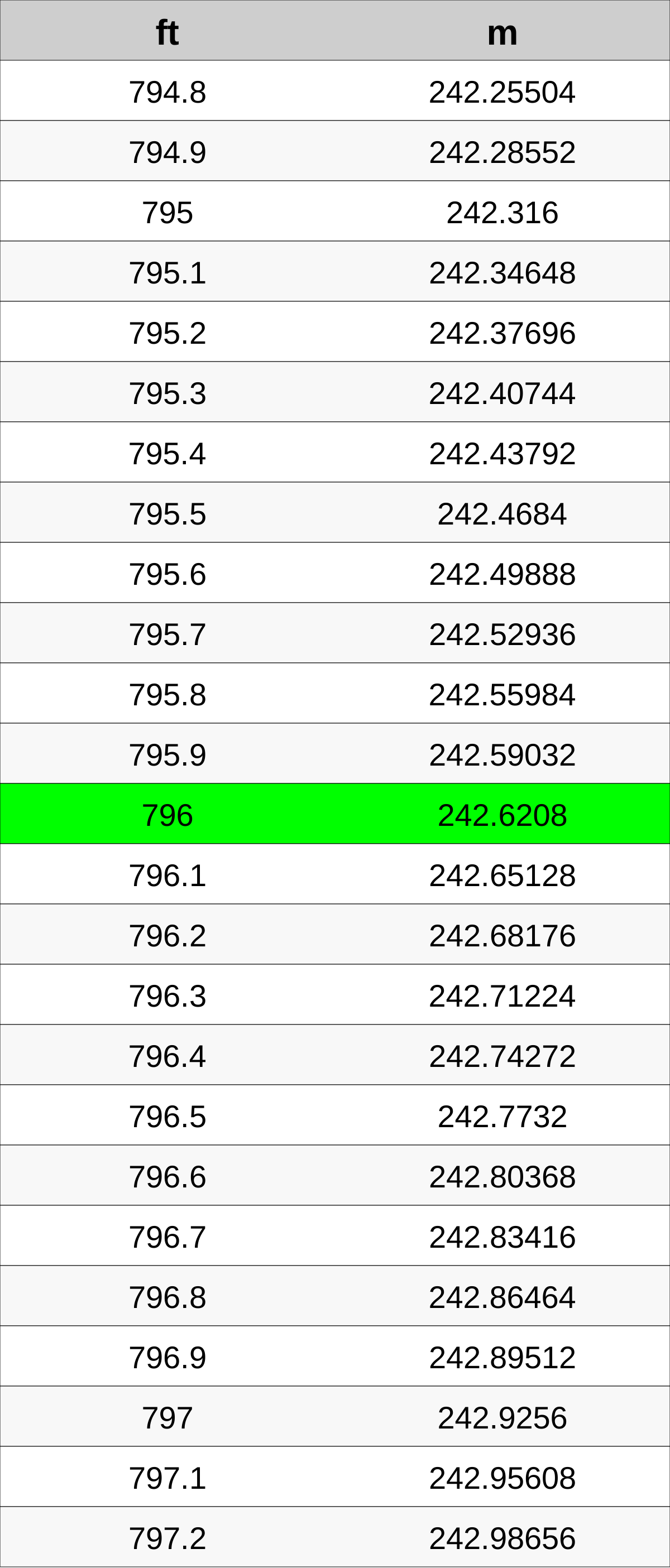
Further Foot to Meter calculations
- 786 Feet to Meters
- 787 Feet to Meters
- 788 Feet to Meter
- 789 ft to m
- 790 Feet to Meter
- 791 ft to Meter
- 792 Feet to Meter
- 793 Feet to Meters
- 794 Feet to Meters
- 795 ft to Meter
- 796 Feet to Meters
- 797 Feet to Meter
- 798 Feet to Meter
- 799 Feet to m
- 800 ft to Meter
- 801 Feet to m
- 802 Feet to Meters
- 803 ft to m
- 804 Feet to Meters
- 805 Feet to m
- 806 Feet to m
Alternative spelling
796 ft to m, 796 ft into m, 796 ft in m, 796 Foot to Meter, 796 Foot into Meter, 796 Foot in Meter, 796 Feet to Meters, 796 Feet into Meters, 796 Feet in Meters, 796 Foot to m, 796 Foot into m, 796 Foot in m, 796 ft to Meter, 796 ft into Meter, 796 ft in Meter, 796 Feet to m, 796 Feet into m, 796 Feet in m, 796 ft to Meters, 796 ft into Meters, 796 ft in Meters
Further Languages
- 796 Feet To Meters
- 796 крак в Метър
- 796 Stopa Na Metr
- 796 Fod Til Meter
- 796 Fuß In Meter
- 796 πόδι σε μέτρο
- 796 Pie En Metro
- 796 Jalg Et Meeter
- 796 Jalka Metri
- 796 Pied En Mètre
- 796 Stopa U Metar
- 796 Láb Méter
- 796 Piede In Metro
- 796 Pėda Iki Metras
- 796 Piedi Fil Metr
- 796 Voet Naar Meter
- 796 Stopa Na Metr
- 796 Pé Em Metro
- 796 Picior în Metr
- 796 Stopa Na Meter
- 796 Fot Till Meter
- 796 Voet In Meter
- 796 متر إلى قدم
- 796 Ayaq Metr
- 796 ফুট মধ্যে মিটার
- 796 Peu A Metre
- 796 पैर से मीटर
- 796 Kaki Ke Meter
- 796 フィート・トゥ・メーターズ
- 796 발 미터
- 796 Fot Til Meter
- 796 нога в метр
- 796 Čevelj V Meter
- 796 Këmbë Në Metri
- 796 ฟุตเมตร
- 796 પગ મીટર
- 796 Fit Metre
- 796 нога в метр
- 796 Foot Sang Mét
- 796 英尺为米
- 796 英尺至米
- 796 Feet To Metree