When discussing various measurements in the realm of engineering, construction, and geography, understanding the significance of specific lengths is crucial. One notable measurement is 4,660 feet, which is equivalent to approximately 1,420 meters. This length can be relevant in multiple contexts, particularly in the fields of civil engineering, architecture, and environmental science. For instance, in civil engineering, the length of 4,660 feet can represent a significant span for bridges, roads, or tunnels. Engineers often need to calculate structural integrity and feasibility for such lengths, considering factors like material strength, load capacity, and environmental impact. In the context of infrastructure development, a span of this length could also relate to the distance of a runway on an airport, where precision and safety are paramount. In geographical terms, 4,660 feet can denote elevation, which is essential for understanding topographical features. For instance, many mountain ranges and peaks in various regions across the globe reach heights around this measurement. An elevation of 4,660 feet can have implications for climate, vegetation, and wildlife, influencing both ecological systems and human activities such as hiking, skiing, or mountaineering. Moreover, in discussions about land use and urban planning, knowing how to convert measurements like 4,660 feet into acres or other relevant units can assist planners in visualizing space and ensuring effective land management. Overall, the length of 4,660 feet serves various practical applications across multiple disciplines. Understanding this measurement's significance can enhance discussions in construction, environmental studies, and urban planning, providing a clearer perspective on how such dimensions impact our world. Whether you're an engineer, planner, or outdoor enthusiast, recognizing the relevance of 4,660 feet can enrich your understanding of the physical landscape and the structures within it.
4660 ft to m
4660 Feet to Meters
4660 Foot to Meter converter
How to convert 4660 Feet to Meter?
| 4660 ft * | 0.3048 m | = 1420.368 m |
| 1 ft |
A common question is How many foot in 4660 meter? And the answer is 15288.713911 ft in 4660 m. Likewise the question how many meter in 4660 foot has the answer of 1420.368 m in 4660 ft.
How much are 4660 Feet in Meters?
4660 Feet equal 1420.368 Meters (4660 ft = 1420.368 m). Converting 4660 ft to m is easy. Simply use our calculator above, or apply the formula to change the length 4660 ft to m.
Convert 4660 ft to common Lengths
| Unit | Lengths |
|---|---|
| Nanometer | 1420368000000 nm |
| Micrometer | 1420368000 µm |
| Millimeter | 1420368 mm |
| Centimeter | 142036.8 cm |
| Inch | 55920 in |
| Yard | 1553.333333 yd |
| Meter | 1420.368 m |
| Kilometer | 1.420368 km |
| Mile | 0.882576 mi |
| Nautical Mile | 0.766937 nmi |
What is 4660 Feet in m?
To convert 4660 ft to m multiply the Lengths in by 0.3048. The 4660 ft in m formula is [m] = 4660 * 0.3048. Thus, for 4660 Feet in Meter we get 1420.368 m.
4660 Foot Conversion Table
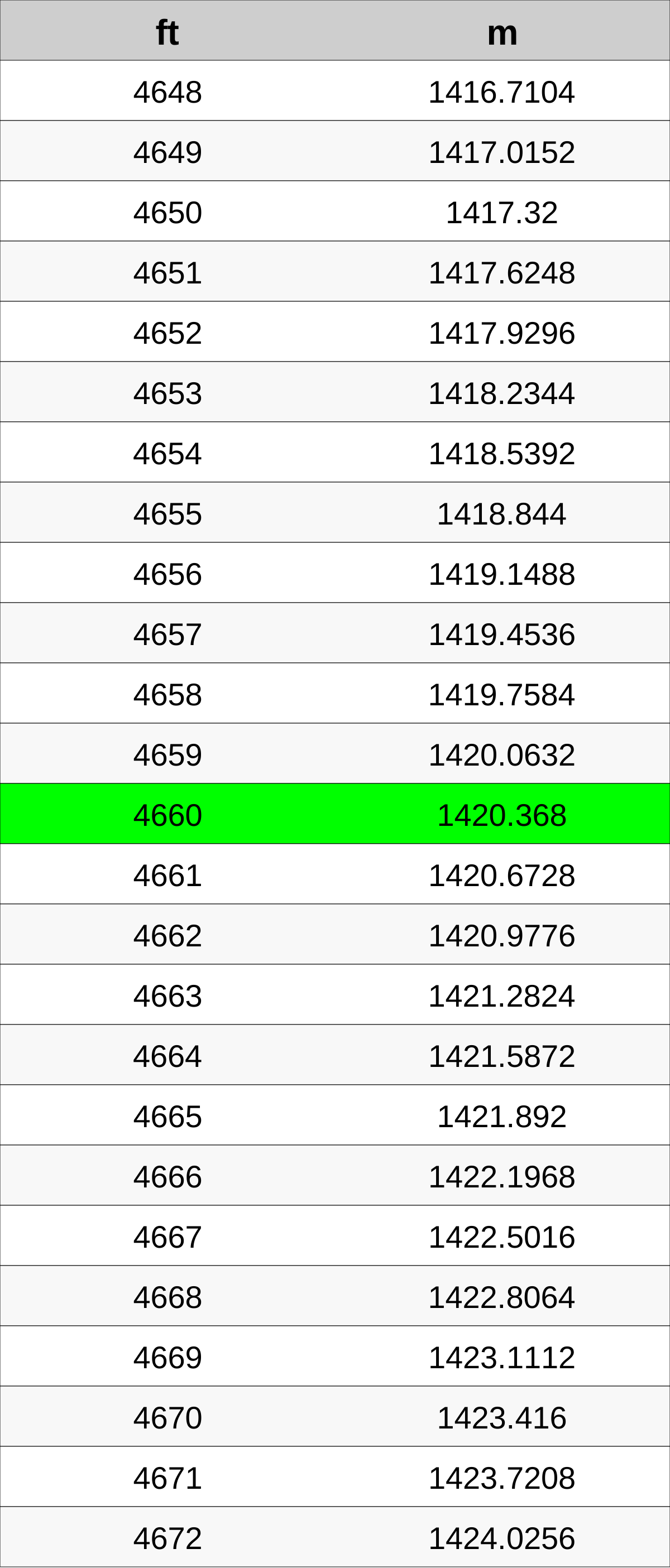
Further Foot to Meter calculations
- 4560 ft to Meters
- 4570 ft to m
- 4580 ft to m
- 4590 ft to Meters
- 4600 Feet to m
- 4610 ft to Meter
- 4620 Feet to Meter
- 4630 ft to Meter
- 4640 ft to Meter
- 4650 ft to Meter
- 4660 ft to m
- 4670 ft to Meters
- 4680 ft to Meters
- 4690 ft to Meters
- 4700 Feet to Meters
- 4710 Feet to Meters
- 4720 ft to m
- 4730 ft to Meters
- 4740 ft to Meter
- 4750 ft to m
- 4760 ft to m
Alternative spelling
4660 ft to m, 4660 ft into m, 4660 ft in m, 4660 Foot to Meter, 4660 Foot into Meter, 4660 Foot in Meter, 4660 Feet to Meters, 4660 Feet into Meters, 4660 Feet in Meters, 4660 Foot to m, 4660 Foot into m, 4660 Foot in m, 4660 ft to Meter, 4660 ft into Meter, 4660 ft in Meter, 4660 Feet to m, 4660 Feet into m, 4660 Feet in m, 4660 ft to Meters, 4660 ft into Meters, 4660 ft in Meters
Further Languages
- 4660 Feet To Meters
- 4660 крак в Метър
- 4660 Stopa Na Metr
- 4660 Fod Til Meter
- 4660 Fuß In Meter
- 4660 πόδι σε μέτρο
- 4660 Pie En Metro
- 4660 Jalg Et Meeter
- 4660 Jalka Metri
- 4660 Pied En Mètre
- 4660 Stopa U Metar
- 4660 Láb Méter
- 4660 Piede In Metro
- 4660 Pėda Iki Metras
- 4660 Piedi Fil Metr
- 4660 Voet Naar Meter
- 4660 Stopa Na Metr
- 4660 Pé Em Metro
- 4660 Picior în Metr
- 4660 Stopa Na Meter
- 4660 Fot Till Meter
- 4660 Voet In Meter
- 4660 متر إلى قدم
- 4660 Ayaq Metr
- 4660 ফুট মধ্যে মিটার
- 4660 Peu A Metre
- 4660 पैर से मीटर
- 4660 Kaki Ke Meter
- 4660 フィート・トゥ・メーターズ
- 4660 발 미터
- 4660 Fot Til Meter
- 4660 нога в метр
- 4660 Čevelj V Meter
- 4660 Këmbë Në Metri
- 4660 ฟุตเมตร
- 4660 પગ મીટર
- 4660 Fit Metre
- 4660 нога в метр
- 4660 Foot Sang Mét
- 4660 英尺为米
- 4660 英尺至米
- 4660 Feet To Metree