When considering the significance of a structure measuring 265 feet in length, it's essential to explore its applications across various fields, including engineering, architecture, and construction. A length of 265 feet can be found in numerous contexts, such as the dimensions of bridges, skyscrapers, or large-scale industrial facilities. For instance, in the realm of bridge construction, a 265-foot span is often utilized to connect two landmasses over bodies of water or valleys, ensuring safe passage for vehicles and pedestrians. In architecture, structures of this length can create impressive visual impacts, making a statement within urban landscapes. Additionally, in the context of sports, a 265-foot distance might be relevant for field dimensions, influencing the design and layout of specific athletic venues. Understanding the implications of a 265-foot length helps professionals in these industries make informed decisions regarding design, materials, and structural integrity, ultimately leading to successful project outcomes. Whether you are involved in planning, construction, or analysis, appreciating the versatility and applications of a 265-foot measurement is crucial in achieving optimal results in your endeavors.
265 ft to m
265 Feet to Meters
265 Foot to Meter converter
How to convert 265 Feet to Meter?
| 265 ft * | 0.3048 m | = 80.772 m |
| 1 ft |
A common question is How many foot in 265 meter? And the answer is 869.422572 ft in 265 m. Likewise the question how many meter in 265 foot has the answer of 80.772 m in 265 ft.
How much are 265 Feet in Meters?
265 Feet equal 80.772 Meters (265 ft = 80.772 m). Converting 265 ft to m is easy. Simply use our calculator above, or apply the formula to change the length 265 ft to m.
Convert 265 ft to common Lengths
| Unit | Length |
|---|---|
| Nanometer | 80772000000 nm |
| Micrometer | 80772000 µm |
| Millimeter | 80772 mm |
| Centimeter | 8077.2 cm |
| Inch | 3180 in |
| Yard | 88.333333 yd |
| Meter | 80.772 m |
| Kilometer | 0.080772 km |
| Mile | 0.050189 mi |
| Nautical Mile | 0.043613 nmi |
What is 265 Feet in m?
To convert 265 ft to m multiply the Lengths in by 0.3048. The 265 ft in m formula is [m] = 265 * 0.3048. Thus, for 265 Feet in Meter we get 80.772 m.
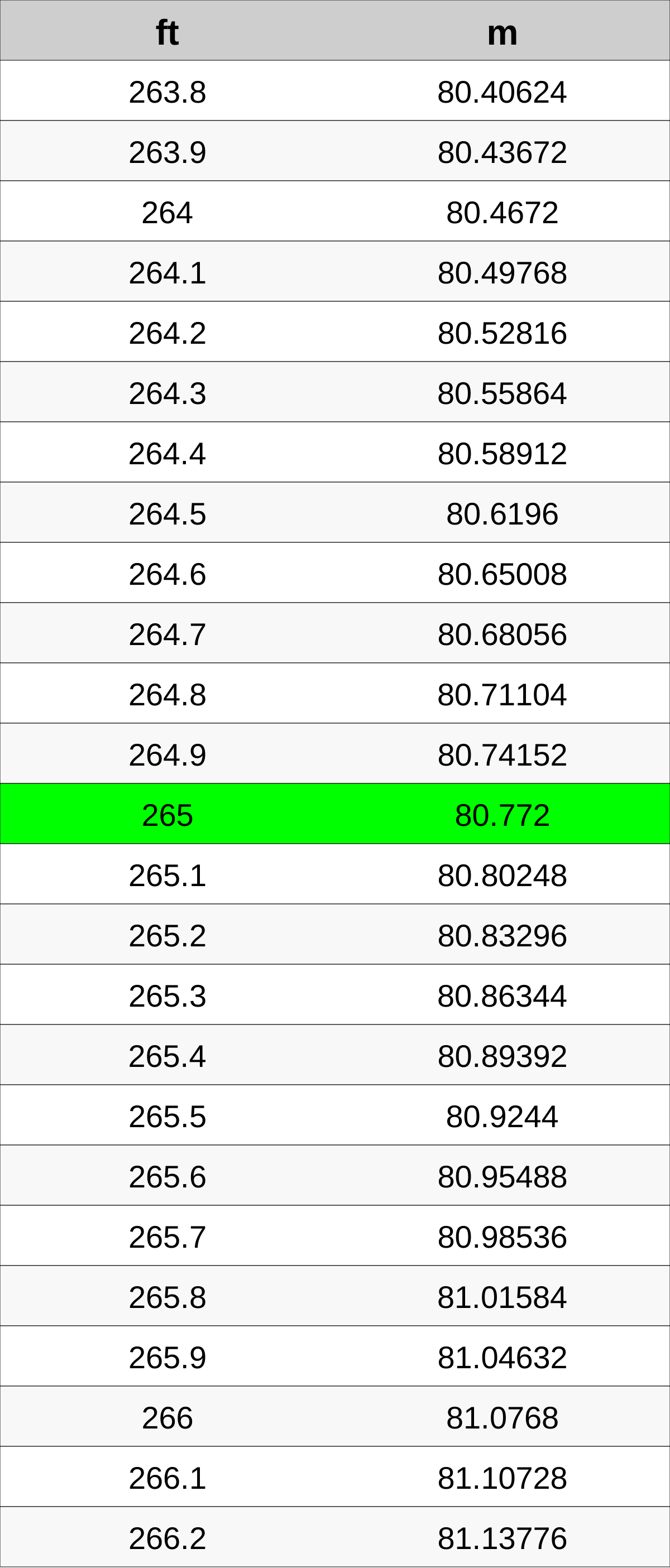
265 Foot Conversion Table
Further Foot to Meter calculations
- 255 ft to Meters
- 256 Feet to m
- 257 ft to m
- 258 Feet to Meter
- 259 Feet to Meter
- 260 ft to Meter
- 261 ft to Meter
- 262 Feet to Meters
- 263 Feet to Meters
- 264 Feet to Meters
- 265 Feet to Meters
- 266 ft to Meter
- 267 Feet to m
- 268 Feet to Meters
- 269 ft to Meter
- 270 ft to Meter
- 271 Feet to m
- 272 ft to m
- 273 Feet to Meters
- 274 ft to Meters
- 275 ft to m
Alternative spelling
265 ft to m, 265 ft into m, 265 ft in m, 265 Foot to Meter, 265 Foot into Meter, 265 Foot in Meter, 265 Feet to Meters, 265 Feet into Meters, 265 Feet in Meters, 265 Foot to m, 265 Foot into m, 265 Foot in m, 265 ft to Meter, 265 ft into Meter, 265 ft in Meter, 265 Feet to m, 265 Feet into m, 265 Feet in m, 265 ft to Meters, 265 ft into Meters, 265 ft in Meters
Further Languages
- 265 Feet To Meters
- 265 крак в Метър
- 265 Stopa Na Metr
- 265 Fod Til Meter
- 265 Fuß In Meter
- 265 πόδι σε μέτρο
- 265 Pie En Metro
- 265 Jalg Et Meeter
- 265 Jalka Metri
- 265 Pied En Mètre
- 265 Stopa U Metar
- 265 Láb Méter
- 265 Piede In Metro
- 265 Pėda Iki Metras
- 265 Piedi Fil Metr
- 265 Voet Naar Meter
- 265 Stopa Na Metr
- 265 Pé Em Metro
- 265 Picior în Metr
- 265 Stopa Na Meter
- 265 Fot Till Meter
- 265 Voet In Meter
- 265 متر إلى قدم
- 265 Ayaq Metr
- 265 ফুট মধ্যে মিটার
- 265 Peu A Metre
- 265 पैर से मीटर
- 265 Kaki Ke Meter
- 265 フィート・トゥ・メーターズ
- 265 발 미터
- 265 Fot Til Meter
- 265 нога в метр
- 265 Čevelj V Meter
- 265 Këmbë Në Metri
- 265 ฟุตเมตร
- 265 પગ મીટર
- 265 Fit Metre
- 265 нога в метр
- 265 Foot Sang Mét
- 265 英尺为米
- 265 英尺至米
- 265 Feet To Metree