When discussing dimensions in various contexts, the measurement of 1480 feet emerges as a significant figure with various applications in engineering, construction, and environmental studies. To put this length into perspective, 1480 feet is approximately equivalent to 0.28 miles or 451.5 meters. This measurement can be crucial when analyzing the scale of large structures, such as bridges, skyscrapers, and transportation corridors. For instance, the height of certain skyscrapers or the length of specific bridges can be compared to this measurement to highlight their grand scale. In civil engineering, understanding dimensions like 1480 feet is essential for planning and design. Engineers often utilize such measurements when determining structural integrity, load distribution, and material requirements. For example, when constructing a bridge that spans 1480 feet, engineers must consider various factors such as wind resistance, weight limits, and environmental impacts. This measurement ensures that the structure can withstand the forces it will encounter over its lifespan. From an environmental perspective, the length of 1480 feet can also be relevant when assessing land use and ecological impacts. For instance, the distance a river might meander could be compared to this measurement, helping assess flood zones or wildlife habitats. In urban planning, understanding distances in feet allows planners to create efficient layouts for transportation, parks, and community services, ensuring they meet the needs of residents while minimizing environmental disruption. In sports, the length of 1480 feet can also be significant. For example, in baseball, outfield dimensions are often discussed in feet, where 1480 feet could represent a combination of distances from home plate to various outfield fences, influencing gameplay and strategy. Overall, the measurement of 1480 feet serves as a versatile reference point across numerous fields, including engineering, construction, environmental science, and urban planning. By understanding and utilizing this measurement effectively, professionals can enhance their projects' design, functionality, and sustainability, ultimately leading to better outcomes in their respective industries. Whether you are involved in large-scale construction projects, environmental assessments, or urban development, recognizing the implications of a length like 1480 feet can be invaluable in achieving success.
1480 ft to m
1480 Feet to Meters
1480 Foot to Meter converter
The measurement of 1480 feet, which is equivalent to approximately 451.104 meters, is a significant dimension that can be applied in various contexts, including construction, engineering, and geography. Understanding this length can enhance one’s comprehension of both everyday and specialized topics. In the realm of construction, 1480 feet can be the total height or length of large structures, such as bridges, towers, or buildings. For instance, when discussing skyscrapers or elevated structures, this measurement can provide insight into their scale and the engineering feats required to achieve such heights. For example, the height of notable structures can be compared to 1480 feet to illustrate their size relative to familiar benchmarks. In engineering, particularly in the fields of civil and structural engineering, knowing precise measurements is crucial. A structure measuring 1480 feet must be designed with considerations for wind load, seismic activity, and materials used, ensuring safety and stability. This length could also represent the span of a bridge or the distance between two points in a construction site, emphasizing the importance of accurate measurements in project planning and execution. In geographical contexts, 1480 feet can represent elevation above sea level, which is significant in fields such as environmental science and geography. For instance, a mountain or hill that reaches this height might influence local climate conditions, vegetation, and wildlife habitats. When discussing topographical maps, elevations in feet are commonly used, making this measurement relevant for hikers, geologists, and outdoor enthusiasts who may be exploring mountainous regions. Additionally, in the context of sports, particularly in track and field or swimming, distances are often measured in feet or meters. An understanding of 1480 feet can help athletes and trainers gauge performance and plan training regimens based on distance. In aviation, understanding vertical and horizontal distances is critical. For example, an altitude of 1480 feet may be significant for flight paths, takeoffs, and landings, affecting safety protocols and navigation strategies. In conclusion, the measurement of 1480 feet or 451.104 meters is versatile and applicable across various domains, including construction, engineering, geography, sports, and aviation. This length serves as a critical reference point in understanding larger structures and distances, facilitating effective communication and planning in professional and recreational activities. By appreciating the implications of this measurement, individuals and professionals can better navigate their respective fields with enhanced clarity and accuracy.
How to convert 1480 Feet to Meter?
| 1480 ft * | 0.3048 m | = 451.104 m |
| 1 ft |
A common question is How many foot in 1480 meter? And the answer is 4855.643045 ft in 1480 m. Likewise the question how many meter in 1480 foot has the answer of 451.104 m in 1480 ft.
How much are 1480 Feet in Meters?
1480 Feet equal 451.104 Meters (1480 ft = 451.104 m). Converting 1480 ft to m is easy. Simply use our calculator above, or apply the formula to change the length 1480 ft to m.
Convert 1480 ft to common Lengths
| Unit | Length |
|---|---|
| Nanometer | 451104000000 nm |
| Micrometer | 451104000 µm |
| Millimeter | 451104 mm |
| Centimeter | 45110.4 cm |
| Inch | 17760 in |
| Yard | 493.333333 yd |
| Meter | 451.104 m |
| Kilometer | 0.451104 km |
| Mile | 0.280303 mi |
| Nautical Mile | 0.243577 nmi |
What is 1480 Feet in m?
To convert 1480 ft to m multiply the Lengths in by 0.3048. The 1480 ft in m formula is [m] = 1480 * 0.3048. Thus, for 1480 Feet in Meter we get 451.104 m.
1480 Foot Conversion Table
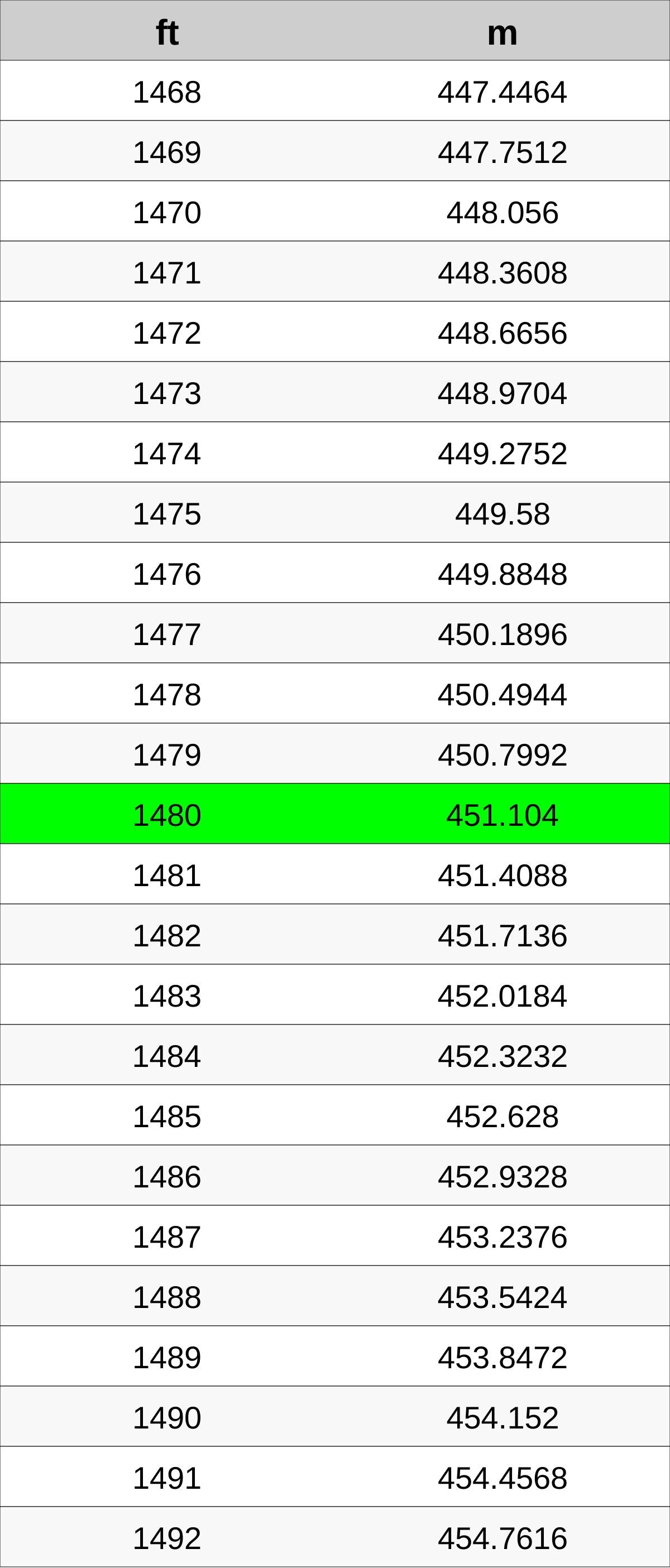
Further Foot to Meter calculations
- 1380 Feet to m
- 1390 Feet to Meters
- 1400 ft to Meters
- 1410 ft to Meter
- 1420 Feet to Meters
- 1430 ft to Meters
- 1440 ft to m
- 1450 Feet to m
- 1460 Feet to Meters
- 1470 Feet to m
- 1480 ft to Meters
- 1490 ft to m
- 1500 ft to Meters
- 1510 ft to Meters
- 1520 Feet to Meters
- 1530 ft to Meters
- 1540 Feet to Meter
- 1550 ft to Meter
- 1560 ft to Meters
- 1570 Feet to Meters
- 1580 Feet to Meter
Alternative spelling
1480 ft to m, 1480 ft into m, 1480 ft in m, 1480 Foot to Meter, 1480 Foot into Meter, 1480 Foot in Meter, 1480 Feet to Meters, 1480 Feet into Meters, 1480 Feet in Meters, 1480 Foot to m, 1480 Foot into m, 1480 Foot in m, 1480 ft to Meter, 1480 ft into Meter, 1480 ft in Meter, 1480 Feet to m, 1480 Feet into m, 1480 Feet in m, 1480 ft to Meters, 1480 ft into Meters, 1480 ft in Meters
Further Languages
- 1480 Feet To Meters
- 1480 крак в Метър
- 1480 Stopa Na Metr
- 1480 Fod Til Meter
- 1480 Fuß In Meter
- 1480 πόδι σε μέτρο
- 1480 Pie En Metro
- 1480 Jalg Et Meeter
- 1480 Jalka Metri
- 1480 Pied En Mètre
- 1480 Stopa U Metar
- 1480 Láb Méter
- 1480 Piede In Metro
- 1480 Pėda Iki Metras
- 1480 Piedi Fil Metr
- 1480 Voet Naar Meter
- 1480 Stopa Na Metr
- 1480 Pé Em Metro
- 1480 Picior în Metr
- 1480 Stopa Na Meter
- 1480 Fot Till Meter
- 1480 Voet In Meter
- 1480 متر إلى قدم
- 1480 Ayaq Metr
- 1480 ফুট মধ্যে মিটার
- 1480 Peu A Metre
- 1480 पैर से मीटर
- 1480 Kaki Ke Meter
- 1480 フィート・トゥ・メーターズ
- 1480 발 미터
- 1480 Fot Til Meter
- 1480 нога в метр
- 1480 Čevelj V Meter
- 1480 Këmbë Në Metri
- 1480 ฟุตเมตร
- 1480 પગ મીટર
- 1480 Fit Metre
- 1480 нога в метр
- 1480 Foot Sang Mét
- 1480 英尺为米
- 1480 英尺至米
- 1480 Feet To Metree