The measurement of 756 feet is significant in various contexts, from architectural projects to natural landmarks. Understanding this length can enhance our appreciation of scale and proportion in both the built and natural environments. For instance, in architecture, 756 feet can represent the height of impressive skyscrapers or the length of expansive bridges, showcasing human ingenuity and engineering prowess. The use of such a specific measurement often emphasizes the grandeur or monumental nature of a structure. In the realm of natural features, 756 feet could refer to the height of a dramatic waterfall or the depth of a canyon, inviting exploration and adventure. Furthermore, in sports, a distance of 756 feet can evoke the achievements of athletes, such as long-distance runners or the remarkable throws in track and field events. When discussing 756 feet, it’s important to convey the context, whether it’s a measurement related to construction, nature, or sports, to fully illustrate its significance. This specific length serves as a benchmark in various disciplines, making it a crucial point of reference for discussions about dimensions, distances, and achievements. Emphasizing its relevance in different fields can help in optimizing content for search engines, ensuring that users searching for information related to this measurement can find comprehensive and engaging content. By integrating keywords related to architecture, nature, and sports with the length of 756 feet, you can create a well-rounded and informative text that resonates with a broad audience, ultimately enhancing visibility and engagement online.
756 ft to m
756 Feet to Meters
756 Foot to Meter converter
The measurement of 756 feet, equivalent to approximately 230.4288 meters, is significant in various contexts, including architecture, engineering, and sports. Understanding this length can help individuals and professionals alike in making informed decisions across different fields. In architecture, a structure of this height can be representative of notable skyscrapers or towers, such as the iconic Empire State Building in New York City, which reaches a height of 1,454 feet including its antenna. Similarly, in engineering, understanding the implications of building or constructing at this height involves considerations of wind load, structural integrity, and safety regulations. In the realm of sports, a length of 756 feet can be related to the dimensions of various athletic fields or tracks, contributing to the design and layout of facilities for optimal performance. Moreover, in maritime contexts, this length can be associated with the dimensions of ships, where understanding the overall length impacts docking, maneuverability, and maritime navigation. For event planning and large gatherings, knowing that 756 feet can accommodate significant crowd sizes is vital for organizers. Whether in urban planning, construction, or recreation, the significance of the 756 feet length is multifaceted, highlighting the importance of precise measurements in numerous applications. As such, professionals across industries must appreciate and utilize this measurement to enhance their projects' effectiveness and safety.
How to convert 756 Feet to Meter?
| 756 ft * | 0.3048 m | = 230.4288 m |
| 1 ft |
A common question is How many foot in 756 meter? And the answer is 2480.314961 ft in 756 m. Likewise the question how many meter in 756 foot has the answer of 230.4288 m in 756 ft.
How much are 756 Feet in Meters?
756 Feet equal 230.4288 Meters (756 ft = 230.4288 m). Converting 756 ft to m is easy. Simply use our calculator above, or apply the formula to change the length 756 ft to m.
Convert 756 ft to common Lengths
| Unit | Lengths |
|---|---|
| Nanometer | 230428800000 nm |
| Micrometer | 230428800 µm |
| Millimeter | 230428.8 mm |
| Centimeter | 23042.88 cm |
| Inch | 9072 in |
| Yard | 252 yd |
| Meter | 230.4288 m |
| Kilometer | 0.230429 km |
| Mile | 0.143182 mi |
| Nautical Mile | 0.124422 nmi |
What is 756 Feet in m?
To convert 756 ft to m multiply the Lengths in by 0.3048. The 756 ft in m formula is [m] = 756 * 0.3048. Thus, for 756 Feet in Meter we get 230.4288 m.
756 Foot Conversion Table
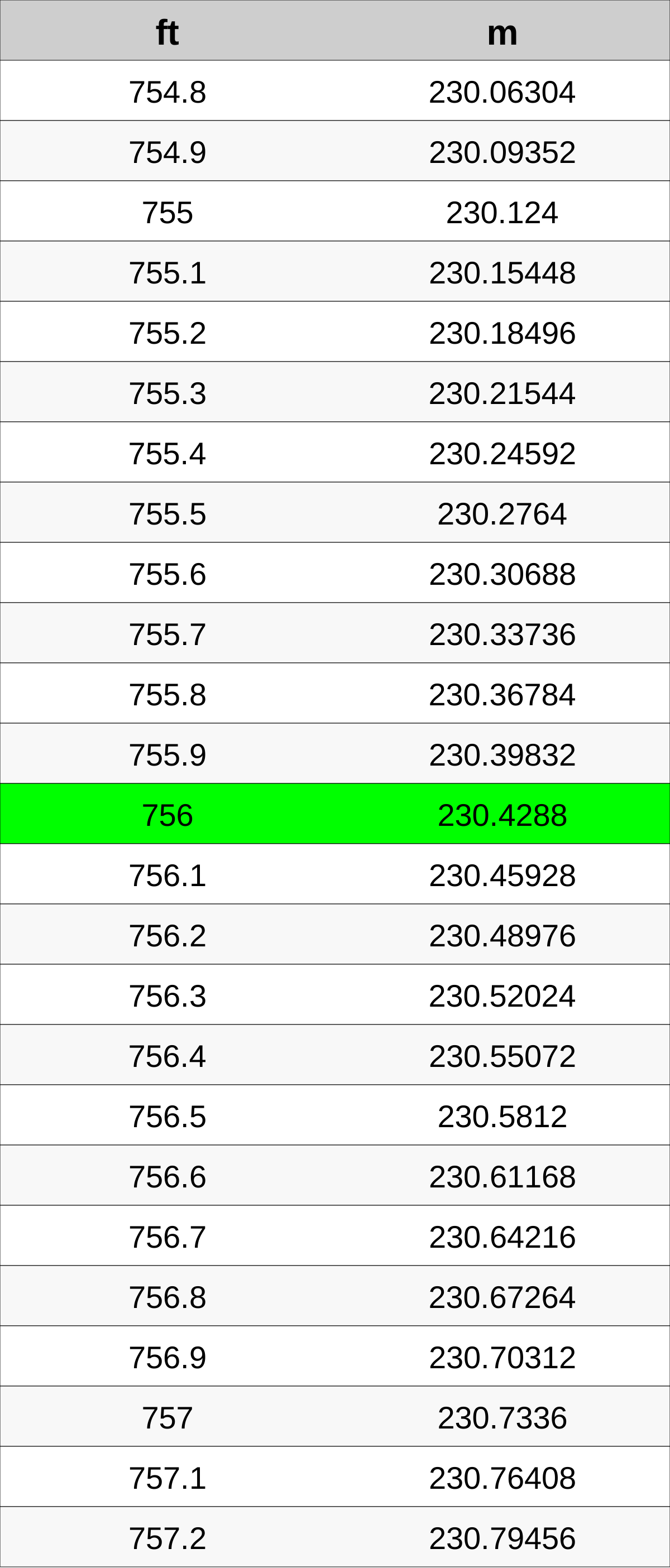
Further Foot to Meter calculations
- 746 ft to m
- 747 Feet to m
- 748 ft to m
- 749 ft to Meters
- 750 ft to Meter
- 751 ft to Meter
- 752 Feet to Meter
- 753 ft to Meters
- 754 ft to Meter
- 755 ft to Meters
- 756 ft to Meters
- 757 ft to m
- 758 Feet to Meters
- 759 ft to m
- 760 Feet to Meter
- 761 ft to Meters
- 762 Feet to m
- 763 Feet to Meters
- 764 ft to Meters
- 765 Feet to Meters
- 766 ft to m
Alternative spelling
756 ft to m, 756 ft into m, 756 ft in m, 756 Foot to Meter, 756 Foot into Meter, 756 Foot in Meter, 756 Feet to Meters, 756 Feet into Meters, 756 Feet in Meters, 756 Foot to m, 756 Foot into m, 756 Foot in m, 756 ft to Meter, 756 ft into Meter, 756 ft in Meter, 756 Feet to m, 756 Feet into m, 756 Feet in m, 756 ft to Meters, 756 ft into Meters, 756 ft in Meters
Further Languages
- 756 Feet To Meters
- 756 крак в Метър
- 756 Stopa Na Metr
- 756 Fod Til Meter
- 756 Fuß In Meter
- 756 πόδι σε μέτρο
- 756 Pie En Metro
- 756 Jalg Et Meeter
- 756 Jalka Metri
- 756 Pied En Mètre
- 756 Stopa U Metar
- 756 Láb Méter
- 756 Piede In Metro
- 756 Pėda Iki Metras
- 756 Piedi Fil Metr
- 756 Voet Naar Meter
- 756 Stopa Na Metr
- 756 Pé Em Metro
- 756 Picior în Metr
- 756 Stopa Na Meter
- 756 Fot Till Meter
- 756 Voet In Meter
- 756 متر إلى قدم
- 756 Ayaq Metr
- 756 ফুট মধ্যে মিটার
- 756 Peu A Metre
- 756 पैर से मीटर
- 756 Kaki Ke Meter
- 756 フィート・トゥ・メーターズ
- 756 발 미터
- 756 Fot Til Meter
- 756 нога в метр
- 756 Čevelj V Meter
- 756 Këmbë Në Metri
- 756 ฟุตเมตร
- 756 પગ મીટર
- 756 Fit Metre
- 756 нога в метр
- 756 Foot Sang Mét
- 756 英尺为米
- 756 英尺至米
- 756 Feet To Metree