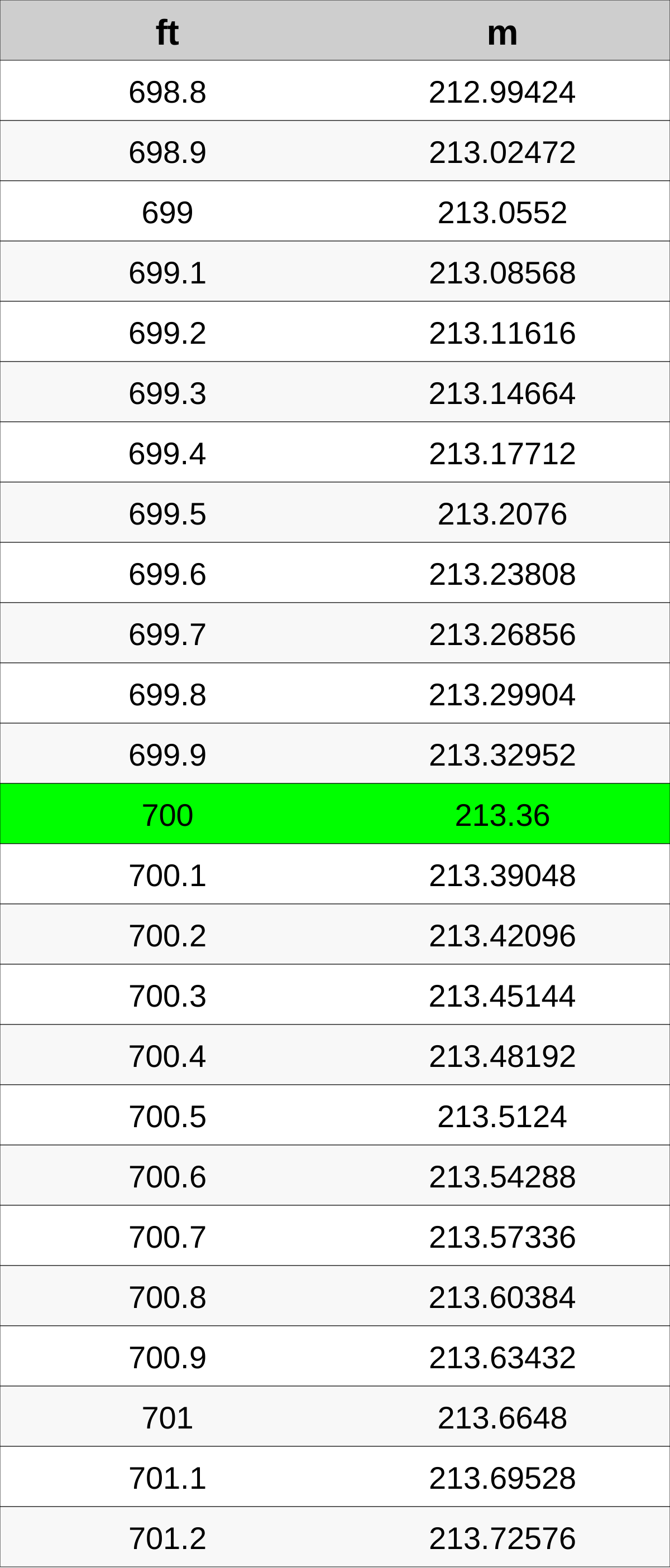
700 Foot to Meter converter
When discussing measurements, the length of 700 feet is a significant dimension that can be relevant in various contexts, including construction, landscaping, sports, and transportation. To put 700 feet into perspective, it is equivalent to approximately 233.3 yards or 213.36 meters. This measurement is often utilized in planning large-scale projects, such as the construction of buildings, roads, or parks, where precise dimensions are crucial for design and functionality. In urban planning, a length of 700 feet can represent the distance between two key points in a city, such as between a public park and a residential area, making it a vital consideration for accessibility and community design. Similarly, in sports, a football field is 300 feet long, so 700 feet could encompass more than two football fields in length, illustrating the scale of certain athletic events or facilities. In landscaping, 700 feet might describe the length of a walking trail or a garden path, contributing to the overall layout and flow of outdoor spaces. Properly planning these dimensions ensures that they meet safety and aesthetic standards, enhancing the user experience. Transportation also benefits from understanding the implications of a length like 700 feet. For instance, in aviation, the length of a runway is critical for the safe takeoff and landing of aircraft. While most commercial runways exceed this length, smaller airfields may operate with runways around this size, making it an essential measurement for aviation safety. Additionally, when discussing real estate and property development, a length of 700 feet can be significant when evaluating lot sizes, property boundaries, and zoning regulations. It can influence the design of residential or commercial properties, determining the layout of buildings, parking spaces, and green areas. In summary, the length of 700 feet is an important measurement across various fields, from construction and urban planning to sports and transportation. Understanding this dimension allows professionals to make informed decisions, ensuring projects are executed effectively and meet the necessary standards and regulations. Whether you are designing a new park, planning a sports facility, or developing real estate, recognizing the implications of a 700-foot length is crucial for success.
The length of 700 feet, which is equivalent to approximately 213.36 meters, holds significance across various fields, including construction, engineering, sports, and transportation. Understanding this measurement can be crucial for professionals and enthusiasts alike. In the context of construction, 700 feet can represent the height of a tall building, the span of a bridge, or the length of a runway at an airport. For instance, many commercial airport runways are designed to be at least 7,000 feet long, accommodating various aircraft types, but a 700-foot runway can serve smaller regional aircraft or be part of a taxiway system. In sports, a distance of 700 feet is often referenced in baseball, particularly concerning home runs. The longest home run ever recorded in Major League Baseball is around 600 feet, making the 700-foot mark a theoretical benchmark for extraordinary feats in the sport. Moreover, in outdoor recreational activities, a hiking trail or a zip line measuring 700 feet can provide significant challenges and unique experiences for adventure seekers. Additionally, in the realm of geography, a length of 700 feet can be used to describe the size of a small park, the width of a river, or the dimensions of a natural feature. For example, a 700-foot elevation change in a hiking trail can indicate a steep climb, presenting both challenges and scenic rewards for hikers. In engineering, the significance of 700 feet can also be observed in the design of structures such as dams, where the length may refer to the width of the spillway or the length of the dam itself. Understanding dimensions in feet and meters is essential for ensuring accurate planning and execution of projects, as well as for compliance with safety regulations. For those interested in converting between feet and meters, the conversion factor is approximately 0.3048 meters per foot. This means that when discussing distances in international contexts, clarity and precision in measurement are paramount. Using standardized measurements helps avoid confusion and ensures that all parties involved have a mutual understanding. In summary, the length of 700 feet or 213.36 meters plays a crucial role in various sectors, from construction to sports and outdoor activities. Its relevance is underlined by the need for accurate measurements and the practical implications these dimensions hold in real-world applications. Whether it is for designing buildings, planning sports events, or engaging in outdoor adventures, the understanding of this specific length can enhance both professional practices and personal experiences.
Alternative spelling
700 ft to m, 700 ft into m, 700 ft in m, 700 Foot to Meter, 700 Foot into Meter, 700 Foot in Meter, 700 Feet to Meters, 700 Feet into Meters, 700 Feet in Meters, 700 Foot to m, 700 Foot into m, 700 Foot in m, 700 ft to Meter, 700 ft into Meter, 700 ft in Meter, 700 Feet to m, 700 Feet into m, 700 Feet in m, 700 ft to Meters, 700 ft into Meters, 700 ft in Meters