525 ft to m
525 Feet to Meters
525 Foot to Meter converter
How to convert 525 Feet to Meter?
| 525 ft * | 0.3048 m | = 160.02 m |
| 1 ft |
A common question is How many foot in 525 meter? And the answer is 1722.440945 ft in 525 m. Likewise the question how many meter in 525 foot has the answer of 160.02 m in 525 ft.
How much are 525 Feet in Meters?
525 Feet equal 160.02 Meters (525 ft = 160.02 m). Converting 525 ft to m is easy. Simply use our calculator above, or apply the formula to change the length 525 ft to m.
Convert 525 ft to common Lengths
| Unit | Lengths |
|---|---|
| Nanometer | 160020000000 nm |
| Micrometer | 160020000 µm |
| Millimeter | 160020 mm |
| Centimeter | 16002 cm |
| Inch | 6300 in |
| Yard | 175 yd |
| Meter | 160.02 m |
| Kilometer | 0.16002 km |
| Mile | 0.099432 mi |
| Nautical Mile | 0.086404 nmi |
What is 525 Feet in m?
To convert 525 ft to m multiply the Lengths in by 0.3048. The 525 ft in m formula is [m] = 525 * 0.3048. Thus, for 525 Feet in Meter we get 160.02 m.
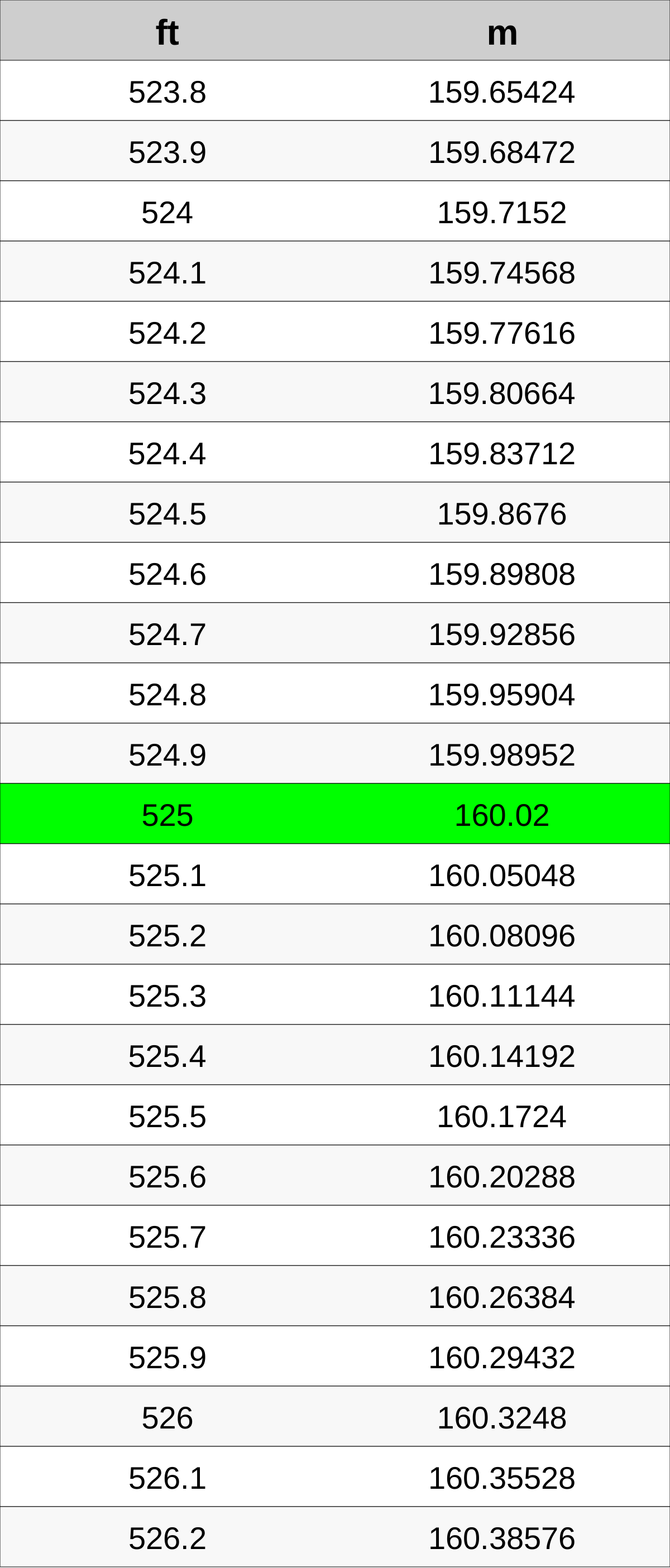
525 Foot Conversion Table
Further Foot to Meter calculations
- 515 Feet to Meter
- 516 ft to Meters
- 517 Feet to Meters
- 518 ft to Meters
- 519 ft to Meters
- 520 ft to m
- 521 Feet to Meter
- 522 ft to m
- 523 Feet to Meters
- 524 ft to m
- 525 Feet to m
- 526 Feet to m
- 527 ft to Meters
- 528 Feet to Meter
- 529 ft to Meters
- 530 ft to Meter
- 531 ft to Meter
- 532 ft to Meters
- 533 ft to m
- 534 ft to m
- 535 ft to m
Alternative spelling
525 ft to m, 525 ft into m, 525 ft in m, 525 Foot to Meter, 525 Foot into Meter, 525 Foot in Meter, 525 Feet to Meters, 525 Feet into Meters, 525 Feet in Meters, 525 Foot to m, 525 Foot into m, 525 Foot in m, 525 ft to Meter, 525 ft into Meter, 525 ft in Meter, 525 Feet to m, 525 Feet into m, 525 Feet in m, 525 ft to Meters, 525 ft into Meters, 525 ft in Meters
Further Languages
- 525 Feet To Meters
- 525 крак в Метър
- 525 Stopa Na Metr
- 525 Fod Til Meter
- 525 Fuß In Meter
- 525 πόδι σε μέτρο
- 525 Pie En Metro
- 525 Jalg Et Meeter
- 525 Jalka Metri
- 525 Pied En Mètre
- 525 Stopa U Metar
- 525 Láb Méter
- 525 Piede In Metro
- 525 Pėda Iki Metras
- 525 Piedi Fil Metr
- 525 Voet Naar Meter
- 525 Stopa Na Metr
- 525 Pé Em Metro
- 525 Picior în Metr
- 525 Stopa Na Meter
- 525 Fot Till Meter
- 525 Voet In Meter
- 525 متر إلى قدم
- 525 Ayaq Metr
- 525 ফুট মধ্যে মিটার
- 525 Peu A Metre
- 525 पैर से मीटर
- 525 Kaki Ke Meter
- 525 フィート・トゥ・メーターズ
- 525 발 미터
- 525 Fot Til Meter
- 525 нога в метр
- 525 Čevelj V Meter
- 525 Këmbë Në Metri
- 525 ฟุตเมตร
- 525 પગ મીટર
- 525 Fit Metre
- 525 нога в метр
- 525 Foot Sang Mét
- 525 英尺为米
- 525 英尺至米
- 525 Feet To Metree