When discussing measurements, the length of 480 feet is a significant dimension that can apply to various contexts, such as construction, sports facilities, and landscaping. In the realm of construction, a length of 480 feet can refer to the span of a large building or the overall dimensions of a commercial property, providing ample space for functionality and design. In sports, many outdoor fields, such as baseball diamonds, have dimensions that approach or exceed this length, impacting gameplay and the experience of spectators. Additionally, in landscaping projects, a length of 480 feet can refer to expansive gardens, walking paths, or even the perimeter of a large estate, showcasing the beauty of nature and offering space for recreational activities. Understanding the implications of a length of 480 feet is essential for architects, planners, and developers, as it influences design choices, land use, and overall project feasibility. Whether you are involved in a construction project, designing a sports facility, or planning a landscape, recognizing the significance of 480 feet can help you make informed decisions that enhance functionality and aesthetics.
480 ft to m
480 Feet to Meters
480 Foot to Meter converter
The measurement of 480 feet, equivalent to 146.304 meters, is significant in various fields, including engineering, architecture, and transportation. Understanding this length can enhance comprehension in a range of practical applications. For instance, in construction, 480 feet may represent the length of a large building or the span of a bridge. In aviation, it could denote the takeoff or landing distance required for certain aircraft. Additionally, in sports, a distance of 480 feet can be relevant in the context of track and field events or the dimensions of specific playing fields. When considering the conversion between feet and meters, it is essential to recognize that 1 foot is equal to 0.3048 meters. Therefore, to convert 480 feet to meters, one can multiply by this conversion factor, resulting in 146.304 meters. This conversion is particularly useful for international projects where metric measurements are standard. In practical applications, the importance of accurately understanding and utilizing measurements like 480 feet cannot be overstated. For instance, in urban planning, knowing the dimensions of public spaces, such as parks or plazas, can influence design and functionality. In the realm of transportation, understanding distances in both feet and meters is critical for infrastructure development, including roads, highways, and rail systems. Furthermore, in the context of environmental studies, a measurement of 480 feet may relate to the height of certain geographical features, such as cliffs or the elevation of specific locations above sea level, which can affect climate and biodiversity in the area. In summary, the length of 480 feet, or 146.304 meters, is a versatile measurement with applications across diverse fields. Whether in construction, transportation, sports, or environmental studies, understanding this length is essential for accurate planning, design, and execution of projects. It serves as a fundamental metric that bridges various disciplines and enhances communication in both local and international contexts.
How to convert 480 Feet to Meter?
| 480 ft * | 0.3048 m | = 146.304 m |
| 1 ft |
A common question is How many foot in 480 meter? And the answer is 1574.80315 ft in 480 m. Likewise the question how many meter in 480 foot has the answer of 146.304 m in 480 ft.
How much are 480 Feet in Meters?
480 Feet equal 146.304 Meters (480 ft = 146.304 m). Converting 480 ft to m is easy. Simply use our calculator above, or apply the formula to change the length 480 ft to m.
Convert 480 ft to common Lengths
| Unit | Lengths |
|---|---|
| Nanometer | 146304000000 nm |
| Micrometer | 146304000 µm |
| Millimeter | 146304 mm |
| Centimeter | 14630.4 cm |
| Inch | 5760 in |
| Yard | 160 yd |
| Meter | 146.304 m |
| Kilometer | 0.146304 km |
| Mile | 0.090909 mi |
| Nautical Mile | 0.078998 nmi |
What is 480 Feet in m?
To convert 480 ft to m multiply the Lengths in by 0.3048. The 480 ft in m formula is [m] = 480 * 0.3048. Thus, for 480 Feet in Meter we get 146.304 m.
480 Foot Conversion Table
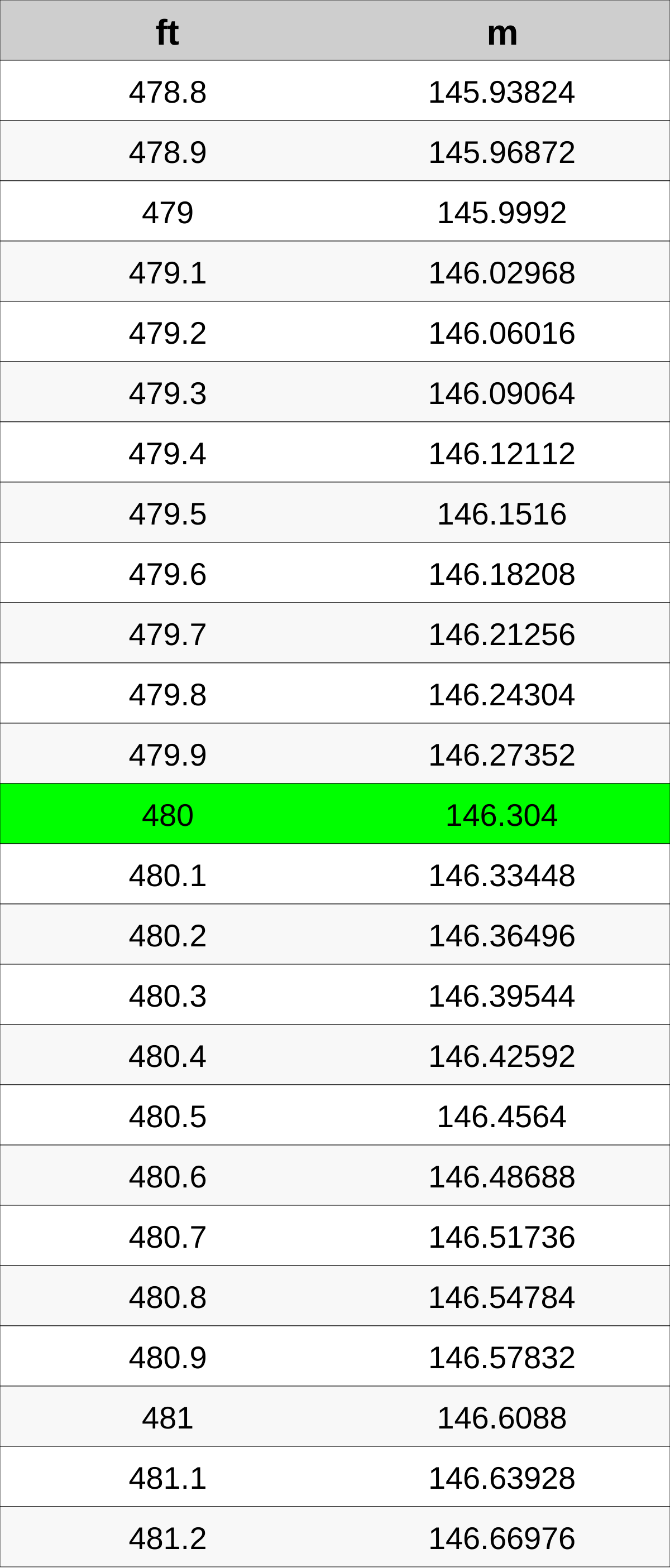
Further Foot to Meter calculations
- 470 Feet to Meter
- 471 ft to m
- 472 ft to Meter
- 473 ft to Meter
- 474 Feet to Meters
- 475 Feet to m
- 476 Feet to Meters
- 477 Feet to Meter
- 478 Feet to Meters
- 479 ft to m
- 480 ft to Meter
- 481 ft to Meters
- 482 ft to Meters
- 483 Feet to Meters
- 484 ft to Meters
- 485 Feet to Meter
- 486 ft to Meters
- 487 ft to Meters
- 488 ft to m
- 489 Feet to Meter
- 490 Feet to Meters
Alternative spelling
480 ft to m, 480 ft into m, 480 ft in m, 480 Foot to Meter, 480 Foot into Meter, 480 Foot in Meter, 480 Feet to Meters, 480 Feet into Meters, 480 Feet in Meters, 480 Foot to m, 480 Foot into m, 480 Foot in m, 480 ft to Meter, 480 ft into Meter, 480 ft in Meter, 480 Feet to m, 480 Feet into m, 480 Feet in m, 480 ft to Meters, 480 ft into Meters, 480 ft in Meters
Further Languages
- 480 Feet To Meters
- 480 крак в Метър
- 480 Stopa Na Metr
- 480 Fod Til Meter
- 480 Fuß In Meter
- 480 πόδι σε μέτρο
- 480 Pie En Metro
- 480 Jalg Et Meeter
- 480 Jalka Metri
- 480 Pied En Mètre
- 480 Stopa U Metar
- 480 Láb Méter
- 480 Piede In Metro
- 480 Pėda Iki Metras
- 480 Piedi Fil Metr
- 480 Voet Naar Meter
- 480 Stopa Na Metr
- 480 Pé Em Metro
- 480 Picior în Metr
- 480 Stopa Na Meter
- 480 Fot Till Meter
- 480 Voet In Meter
- 480 متر إلى قدم
- 480 Ayaq Metr
- 480 ফুট মধ্যে মিটার
- 480 Peu A Metre
- 480 पैर से मीटर
- 480 Kaki Ke Meter
- 480 フィート・トゥ・メーターズ
- 480 발 미터
- 480 Fot Til Meter
- 480 нога в метр
- 480 Čevelj V Meter
- 480 Këmbë Në Metri
- 480 ฟุตเมตร
- 480 પગ મીટર
- 480 Fit Metre
- 480 нога в метр
- 480 Foot Sang Mét
- 480 英尺为米
- 480 英尺至米
- 480 Feet To Metree