The measurement of 2,680 feet is significant in various contexts, whether discussing natural landscapes, construction projects, or recreational activities. Understanding this length can enhance our appreciation of dimensions in both everyday life and specialized fields. For instance, 2,680 feet translates to approximately 0.51 miles, making it a relevant figure for outdoor enthusiasts who enjoy hiking and exploring trails. Many popular hiking trails and scenic viewpoints fall within this distance, allowing adventurers to gauge their journeys effectively. In the realm of architecture and construction, a length of 2,680 feet can represent the span of bridges, the height of skyscrapers, or the dimensions of large structures. This measurement is critical for engineers and architects as they design safe and functional buildings and infrastructure. In the context of aviation, 2,680 feet can describe the length of runways at smaller regional airports, which are crucial for accommodating various aircraft sizes. Additionally, this measurement is often used in environmental studies, where understanding the extent of land features such as cliffs, valleys, or bodies of water is essential for conservation efforts. Overall, whether in recreation, construction, aviation, or environmental science, the length of 2,680 feet serves as a vital unit of measurement, providing context and clarity across numerous applications. Understanding such measurements is essential for effective communication in various industries and can significantly enhance planning, execution, and enjoyment of outdoor activities.
2680 ft to m
2680 Feet to Meters
2680 Foot to Meter converter
How to convert 2680 Feet to Meter?
| 2680 ft * | 0.3048 m | = 816.864 m |
| 1 ft |
A common question is How many foot in 2680 meter? And the answer is 8792.650919 ft in 2680 m. Likewise the question how many meter in 2680 foot has the answer of 816.864 m in 2680 ft.
How much are 2680 Feet in Meters?
2680 Feet equal 816.864 Meters (2680 ft = 816.864 m). Converting 2680 ft to m is easy. Simply use our calculator above, or apply the formula to change the length 2680 ft to m.
Convert 2680 ft to common Lengths
| Unit | Lengths |
|---|---|
| Nanometer | 816864000000 nm |
| Micrometer | 816864000 µm |
| Millimeter | 816864 mm |
| Centimeter | 81686.4 cm |
| Inch | 32160 in |
| Yard | 893.333333 yd |
| Meter | 816.864 m |
| Kilometer | 0.816864 km |
| Mile | 0.507576 mi |
| Nautical Mile | 0.441071 nmi |
What is 2680 Feet in m?
To convert 2680 ft to m multiply the Lengths in by 0.3048. The 2680 ft in m formula is [m] = 2680 * 0.3048. Thus, for 2680 Feet in Meter we get 816.864 m.
2680 Foot Conversion Table
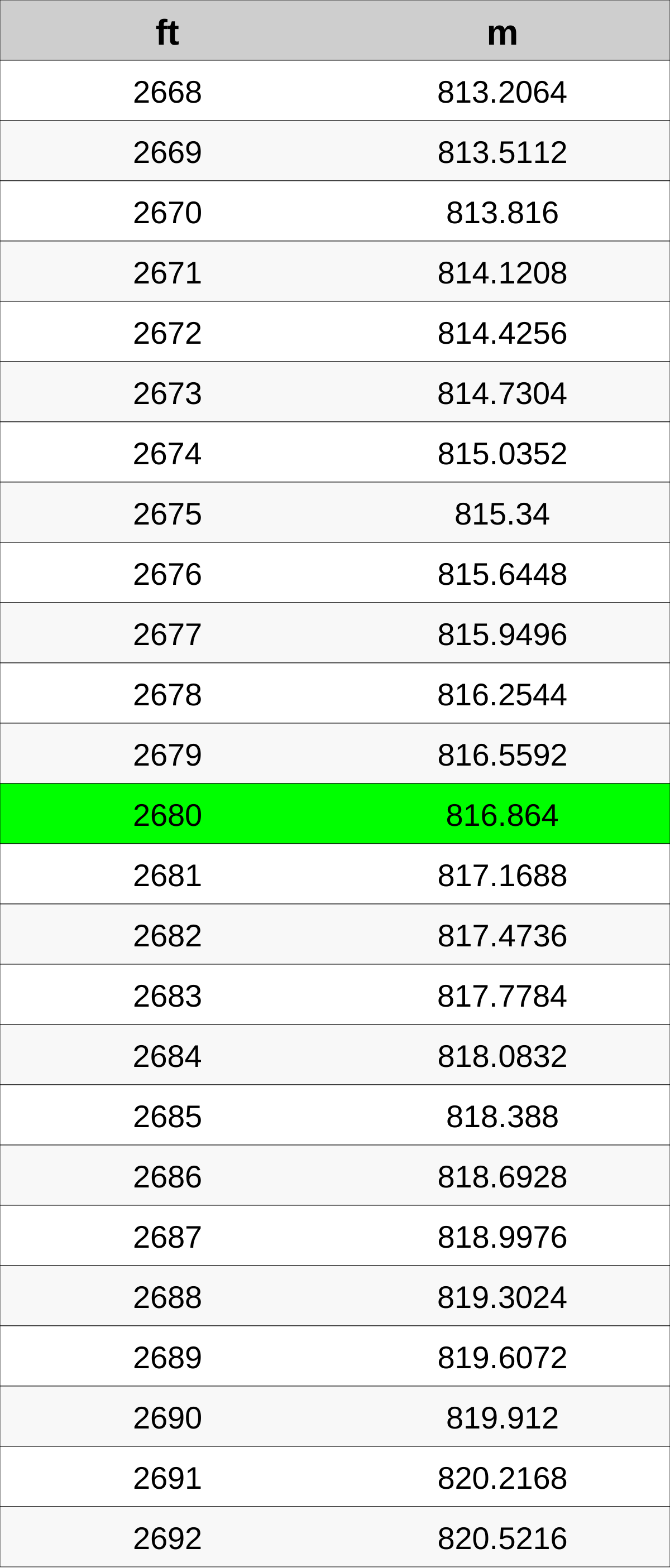
Further Foot to Meter calculations
- 2580 Feet to Meters
- 2590 Feet to Meter
- 2600 Feet to Meters
- 2610 Feet to Meter
- 2620 Feet to Meter
- 2630 Feet to Meters
- 2640 Feet to Meters
- 2650 Feet to Meters
- 2660 ft to m
- 2670 Feet to Meter
- 2680 ft to m
- 2690 ft to Meters
- 2700 ft to Meter
- 2710 ft to m
- 2720 Feet to Meter
- 2730 Feet to Meters
- 2740 ft to m
- 2750 Feet to Meter
- 2760 Feet to Meters
- 2770 ft to m
- 2780 ft to Meters
Alternative spelling
2680 ft to m, 2680 ft into m, 2680 ft in m, 2680 Foot to Meter, 2680 Foot into Meter, 2680 Foot in Meter, 2680 Feet to Meters, 2680 Feet into Meters, 2680 Feet in Meters, 2680 Foot to m, 2680 Foot into m, 2680 Foot in m, 2680 ft to Meter, 2680 ft into Meter, 2680 ft in Meter, 2680 Feet to m, 2680 Feet into m, 2680 Feet in m, 2680 ft to Meters, 2680 ft into Meters, 2680 ft in Meters
Further Languages
- 2680 Feet To Meters
- 2680 крак в Метър
- 2680 Stopa Na Metr
- 2680 Fod Til Meter
- 2680 Fuß In Meter
- 2680 πόδι σε μέτρο
- 2680 Pie En Metro
- 2680 Jalg Et Meeter
- 2680 Jalka Metri
- 2680 Pied En Mètre
- 2680 Stopa U Metar
- 2680 Láb Méter
- 2680 Piede In Metro
- 2680 Pėda Iki Metras
- 2680 Piedi Fil Metr
- 2680 Voet Naar Meter
- 2680 Stopa Na Metr
- 2680 Pé Em Metro
- 2680 Picior în Metr
- 2680 Stopa Na Meter
- 2680 Fot Till Meter
- 2680 Voet In Meter
- 2680 متر إلى قدم
- 2680 Ayaq Metr
- 2680 ফুট মধ্যে মিটার
- 2680 Peu A Metre
- 2680 पैर से मीटर
- 2680 Kaki Ke Meter
- 2680 フィート・トゥ・メーターズ
- 2680 발 미터
- 2680 Fot Til Meter
- 2680 нога в метр
- 2680 Čevelj V Meter
- 2680 Këmbë Në Metri
- 2680 ฟุตเมตร
- 2680 પગ મીટર
- 2680 Fit Metre
- 2680 нога в метр
- 2680 Foot Sang Mét
- 2680 英尺为米
- 2680 英尺至米
- 2680 Feet To Metree