The length of 1,950 feet is a significant measurement that can be applied to various contexts, including construction, sports, and natural landmarks. In the world of construction, understanding the dimensions of a project is crucial for engineers and architects. For instance, a building or bridge measuring 1,950 feet can host a multitude of functionalities, accommodating both commercial and residential spaces. In sports, a length of 1,950 feet can refer to the dimensions of a running track or a field, influencing the design and layout of athletic facilities. Additionally, natural landscapes, such as rivers or mountain ranges, can stretch to 1,950 feet, providing unique opportunities for recreation and exploration. Whether you are planning a construction project, designing a sports venue, or studying geographical features, recognizing the significance of 1,950 feet is essential for accurate planning and execution. Understanding this length can also enhance your knowledge of dimensions and scales in various fields, making it a valuable reference point in discussions related to measurement and design.
1950 ft to m
1950 Feet to Meters
1950 Foot to Meter converter
The measurement of 1950 feet, equivalent to 594.36 meters, is significant in various contexts, particularly in engineering, architecture, and aviation. In terms of height, 1950 feet is just shy of the height of the iconic Statue of Liberty, which stands at approximately 305 feet from the base to the tip of the torch. This measurement is often used to describe the elevation of certain mountain peaks or the altitude of specific aircraft during flight. For instance, many commercial airliners cruise at altitudes between 30,000 to 40,000 feet, making 1950 feet a relatively low altitude, typically associated with takeoff or landing phases. In the realm of construction, a length of 1950 feet can be applied to the specifications of large infrastructure projects such as bridges, tunnels, or highways. For instance, the Golden Gate Bridge spans approximately 1.7 miles, which translates to roughly 8,981 feet, making 1950 feet a modest segment of such expansive structures. In terms of sports, a running track is often measured in meters or feet, and a distance of 1950 feet could represent a challenging sprint or a specific segment of a marathon. Understanding this measurement is essential for professionals in fields that require precise calculations, such as surveying, landscape architecture, and urban planning. The use of both feet and meters allows for flexibility in international contexts, as different regions may prefer one measurement system over the other. Consequently, the conversion between these two units is crucial for global communication and collaboration in various industries. Overall, the length of 1950 feet or 594.36 meters serves multiple purposes across different fields, highlighting its importance in quantitative assessments and practical applications.
How to convert 1950 Feet to Meter?
| 1950 ft * | 0.3048 m | = 594.36 m |
| 1 ft |
A common question is How many foot in 1950 meter? And the answer is 6397.637795 ft in 1950 m. Likewise the question how many meter in 1950 foot has the answer of 594.36 m in 1950 ft.
How much are 1950 Feet in Meters?
1950 Feet equal 594.36 Meters (1950 ft = 594.36 m). Converting 1950 ft to m is easy. Simply use our calculator above, or apply the formula to change the length 1950 ft to m.
Convert 1950 ft to common Lengths
| Unit | Length |
|---|---|
| Nanometer | 594360000000 nm |
| Micrometer | 594360000 µm |
| Millimeter | 594360 mm |
| Centimeter | 59436 cm |
| Inch | 23400 in |
| Yard | 650 yd |
| Meter | 594.36 m |
| Kilometer | 0.59436 km |
| Mile | 0.369318 mi |
| Nautical Mile | 0.320929 nmi |
What is 1950 Feet in m?
To convert 1950 ft to m multiply the Lengths in by 0.3048. The 1950 ft in m formula is [m] = 1950 * 0.3048. Thus, for 1950 Feet in Meter we get 594.36 m.
1950 Foot Conversion Table
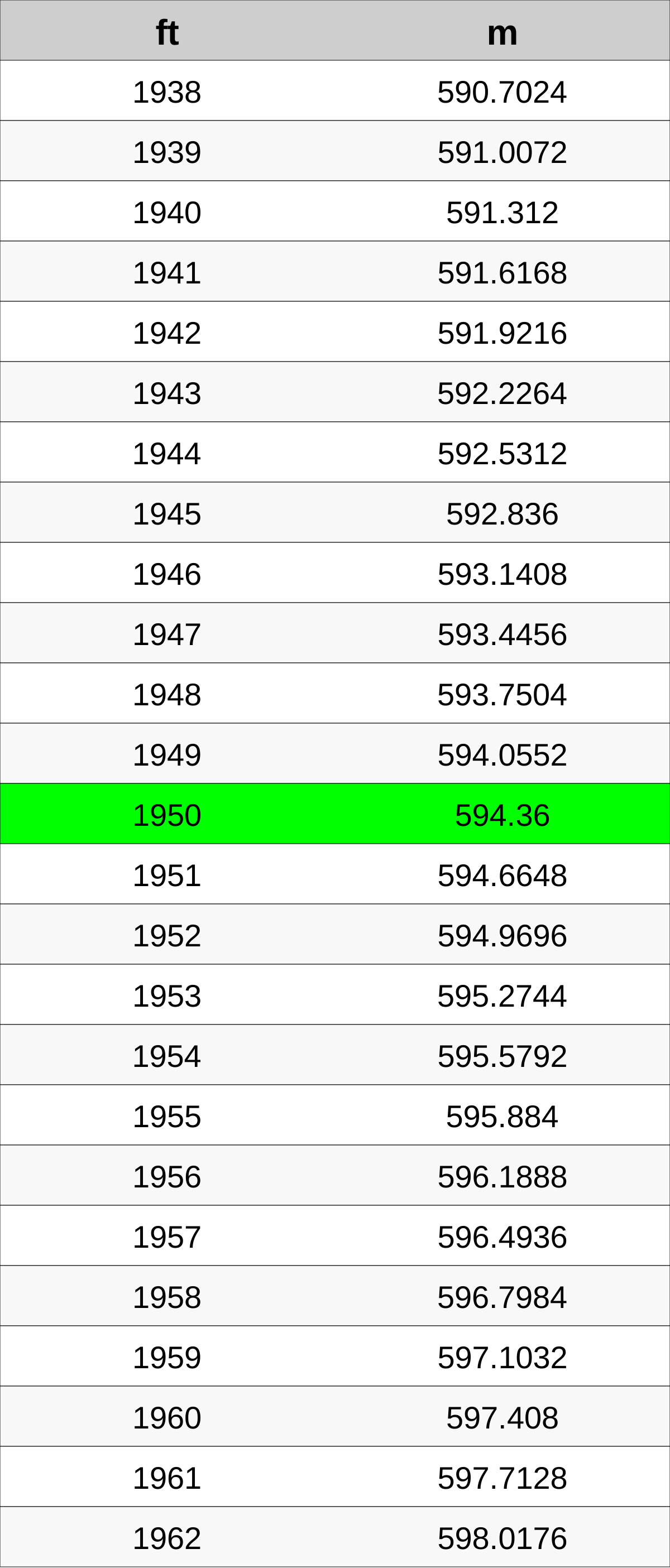
Further Foot to Meter calculations
- 1850 ft to m
- 1860 Feet to Meter
- 1870 ft to Meter
- 1880 Feet to Meters
- 1890 Feet to Meter
- 1900 ft to Meters
- 1910 ft to Meter
- 1920 Feet to m
- 1930 ft to m
- 1940 Feet to Meters
- 1950 Feet to Meters
- 1960 Feet to Meters
- 1970 Feet to m
- 1980 Feet to Meters
- 1990 ft to Meter
- 2000 Feet to Meters
- 2010 ft to m
- 2020 Feet to Meter
- 2030 ft to m
- 2040 Feet to Meters
- 2050 Feet to m
Alternative spelling
1950 ft to m, 1950 ft into m, 1950 ft in m, 1950 Foot to Meter, 1950 Foot into Meter, 1950 Foot in Meter, 1950 Feet to Meters, 1950 Feet into Meters, 1950 Feet in Meters, 1950 Foot to m, 1950 Foot into m, 1950 Foot in m, 1950 ft to Meter, 1950 ft into Meter, 1950 ft in Meter, 1950 Feet to m, 1950 Feet into m, 1950 Feet in m, 1950 ft to Meters, 1950 ft into Meters, 1950 ft in Meters
Further Languages
- 1950 Feet To Meters
- 1950 крак в Метър
- 1950 Stopa Na Metr
- 1950 Fod Til Meter
- 1950 Fuß In Meter
- 1950 πόδι σε μέτρο
- 1950 Pie En Metro
- 1950 Jalg Et Meeter
- 1950 Jalka Metri
- 1950 Pied En Mètre
- 1950 Stopa U Metar
- 1950 Láb Méter
- 1950 Piede In Metro
- 1950 Pėda Iki Metras
- 1950 Piedi Fil Metr
- 1950 Voet Naar Meter
- 1950 Stopa Na Metr
- 1950 Pé Em Metro
- 1950 Picior în Metr
- 1950 Stopa Na Meter
- 1950 Fot Till Meter
- 1950 Voet In Meter
- 1950 متر إلى قدم
- 1950 Ayaq Metr
- 1950 ফুট মধ্যে মিটার
- 1950 Peu A Metre
- 1950 पैर से मीटर
- 1950 Kaki Ke Meter
- 1950 フィート・トゥ・メーターズ
- 1950 발 미터
- 1950 Fot Til Meter
- 1950 нога в метр
- 1950 Čevelj V Meter
- 1950 Këmbë Në Metri
- 1950 ฟุตเมตร
- 1950 પગ મીટર
- 1950 Fit Metre
- 1950 нога в метр
- 1950 Foot Sang Mét
- 1950 英尺为米
- 1950 英尺至米
- 1950 Feet To Metree